GRIHA for Affordable Housing

Introduction


GRIHA Council has developed "GRIHA for Affordable Housing" aligned to the Pradhan Mantri Awas Yojana (PMAY) scheme.  

The rating evaluates the environmental performance of residences holistically over its entire life cycle. The rating thus provides a definitive standard for what constitutes a 'green building' as it is a dedicated assessment cum rating tool, and a pre-fed calculator-based system. 

Intent


The intent of the rating is to promote low-income households to reduce their operational costs and GHG emissions by improving their resource efficiency. 

Salients Features

1
2
3

Comprehensive Sustainability Coverage

By including Site Planning, Energy and Occupant comfort, Water Saving, Waste Management, Sustainable Building Material, and Social Aspects.

Cost-Effective Measures

As it prioritizes low-cost, high-impact interventions such as passive design, water-efficient fixtures, and locally sourced materials.

Focus on Social Welfare

As it includes provisions for universal accessibility, worker welfare facilities and community environmental awareness.

Benefits/Advantages of adopting GRIHA for Affordable Housing

Alignment with Government Schemes

As it is compatible with Pradhan Mantri Awas Yojana (PMAY) and other affordable housing initiatives. It helps in meeting the compliances and enhance eligibility for incentives.

Title

The projects achieving 4 and 5-star GRIHA AH pre-certification are provided financial incentives under SUNREF India.

Eligibility & Virtual Boundary

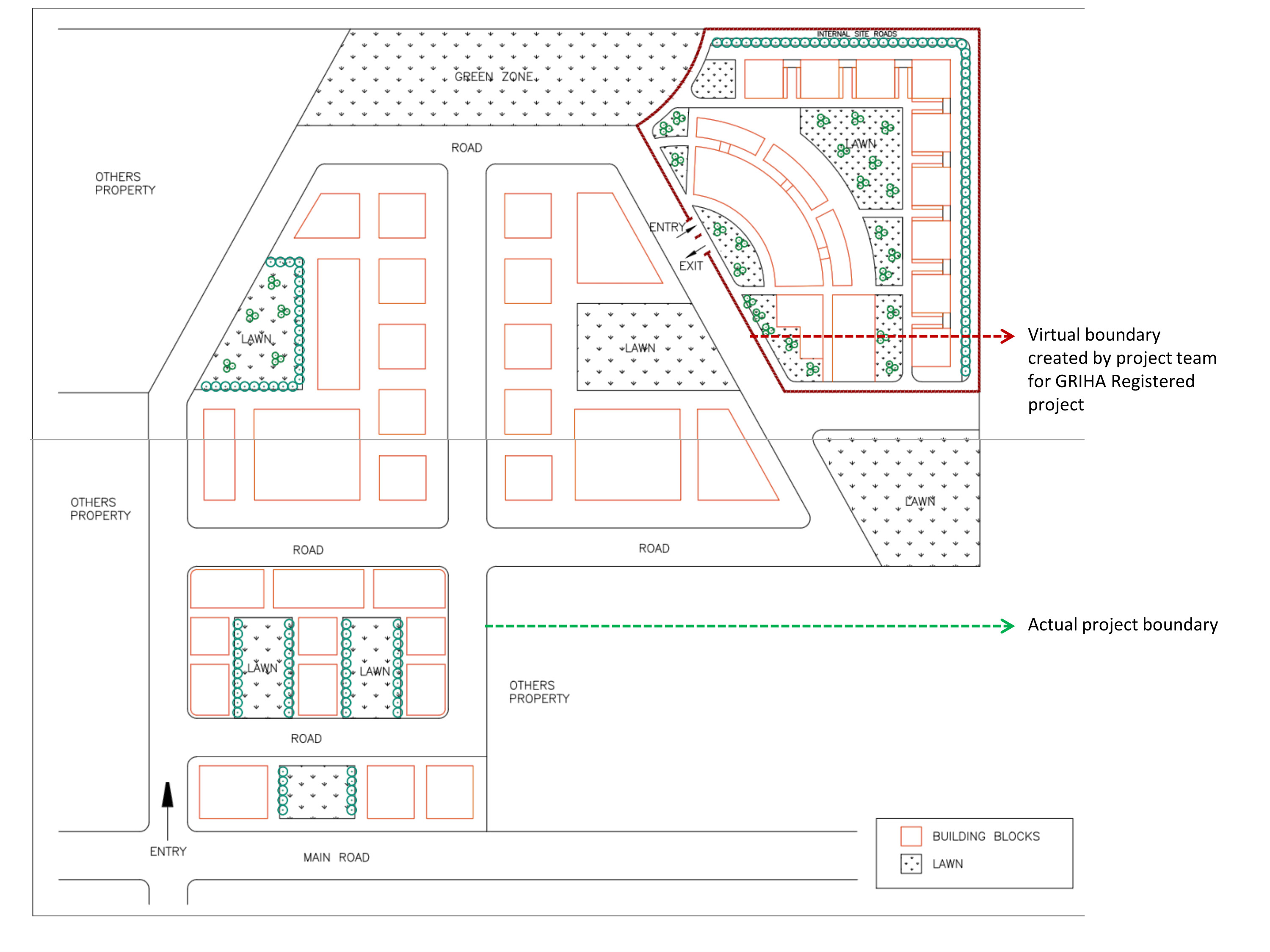
Project Boundary
Virtual Boundary
Virtual Boundary.png

All projects that are in-line with the PMAY requirements will be eligible for GRIHA AH since the rating strives to integrate sustainability in the residences in line with the PMAY.

  • Liveability index (Affordable housing built-up area thresholds): Essential Approval letter issued by government agency (Central/State) confirming that the project is being developed as per Pradhan Mantri Awas Yojana scheme/guidelines must be submitted.
  • Site Selection – Mandatory: The site plan must be in conformity with the development plan/master plan/UDPFI guidelines. Compliance must be demonstrated with the provisions of eco-sensitive zone regulations, coastal zone regulations, heritage areas (identified in the master plan or issued separately as specific guidelines), water body zones (in such zones, no construction is permitted in the water spread and buffer belt of 30 meter minimum around the FTL), various hazard prone area regulations, and others if the site falls under any such area.
  • Optimum availability of water – Indicative: Total water requirement estimation for the site and approval document (with assurance on the supply of the required water quantity) from the local municipal authority highlighting the total water which will be available for the development must be submitted. 

GRIHA for Affordable Housing Process

GRIHA AH Rating Process.png

GRIHA for Affordable Housing Thresholds

Rating Threshold
GRIHA for Affordable Housing Rating
25-40
41-55
56-70
71-85
86 and more

Fast-Track Registration Process

The fast-track process is intended to provide handholding support to projects that need a faster government approvals. It reduces the time required for rating while maintaining the integrity and accuracy of the GRIHA AH rating system. 

Review StageReview ProcessFast Track
Review of First SubmissionWithin 20-30 working daysWithin 8-10 working days
Final Site VisitDone within 20-30 working days after sending review commentsWill be done within 5-7 working days after sending review
Due Diligence ReportSent within 15 working days after site visitWill be sent within 2 working days after site visit
Final ReportDone within 15-20 working days after receipt of second documentationWill be done within 5-7 working days after receipt of second documentation

Fast Track Fees: Rs. 10 lakhs + Taxes Applicable as per the Government norms.

Criterion with Weightages

 
S.No.Section NameCriterion No.Criterion NameCriterion BriefMax. PointsSection Total
1Site Planning1Low Impact DesignEncourages site layout that minimizes disturbance to natural features and optimizes land use. 616
2Design to Mitigate UHIEUses shading, vegetation, and reflective materials to reduce urban heat island effect. 3
3Preservation and Protection of Landscape during ConstructionSafeguards existing vegetation and soil quality through protective measures.3
4 Storm Water ManagementImplements systems to collect, filter, and recharge storm water to reduce runoff. 2
5Reduction in Air and Soil Pollution during ConstructionApplies dust suppression, waste control, and erosion prevention techniques. 2
2Energy & Occupant Comfort6Envelope Thermal PerformanceOptimizes building insulation and materials to reduce heat gain/loss. 825
7Occupant Visual Comfort (Daylight)Maximizes daylight penetration while controlling glare. 5
8Efficient lightingPromotes the use of energy-efficient lighting fixtures. 2
9Energy Efficient EquipmentEncourages high-efficiency appliances and systems to reduce energy use. 2
10Renewable EnergyIntegrates on-site renewable energy systems such as solar PV.6
11Energy MeteringProvides separate metering for energy monitoring and optimization. 2
3Water Savings12 Efficient use of Water during ConstructionAdopts practices to minimize water consumption at construction sites. 219
13Optimization of Building and Landscape Water DemandReduces water use through low-flow fixtures and native landscaping. 9
14 Water ReuseEncourages recycling and reuse of wastewater for landscaping or flushing. 7
15Water MeteringInstalls meters to track water consumption for efficient management. 1
4Waste Management16Construction Waste ManagementEnsures segregation, reuse, and safe disposal of construction debris. 17
17Post Construction Waste ManagementProvides systems for segregation and recycling of household waste. 6
5Sustainable Building Material18Reduction in Environmental Impact of Construction Uses locally available, resource-efficient, and low-impact materials. 617
19Use of Low-Environmental Impact Materials in Building Interiors Encourages non-toxic, sustainable materials for finishes and interiors.5
20Use of Recycled Content in Roads and PavementUtilizes recycled materials such as fly ash or reclaimed aggregates.4
21 Low VOC paints, Adhesives, Sealants and Composite Wood ProductsMinimizes indoor air pollutants by using low-VOC and non-toxic materials. 2
22Zero ODP MaterialsProhibits materials with ozone-depleting substances in construction. Mandatory
6Social Aspects23Facilities for Construction Workers Provides safe housing, sanitation, and welfare amenities for workers.116
24Universal AccessibilityDesigns for barrier-free access for differently-abled and elderly persons. 2
25Proximity to Transport and Basic ServicesEnsures housing is within easy reach of public transport, schools, and healthcare. 10
26Environmental AwarenessConducts awareness programs for residents on sustainable living. 2
27Tobacco Smoke ControlRestricts indoor smoking to maintain healthy indoor air quality. Mandatory
28Water QualityEnsures potable water meets prescribed quality standards. Mandatory
29Provision of Access to Clean Sources of Cooking FuelPromotes use of LPG, PNG, or other clean cooking fuels. 1
11Bonus Points30Bonus PointsAwards extra points for exemplary or innovative sustainability measures.44
Grand Total (Bonus Points are above 100 points)100+4100+4

Rating Fees

Fee Summary

Additional Cost (if opted):

  • One-day workshop: Rs. 20,000/- plus GST
  • All travel and accommodation of GRIHA professionals, for outside Delhi projects, is not included in the above cost and shall be arranged by the client.  
Built-Up AreaRegistration cum Rating FeeFee USD
Till 10,000 sq. m.Rs 2,50,000 + GST3,500
For every sq. m. above 10,000 sq. m.Rs 2,50,000 + Additional Built-Up Charged @ Rs. 3.75 per sq. m. + GST0.1 (10 cent) per sq. m.

Calculate Your Project Fee

Enter details and click Calculate.