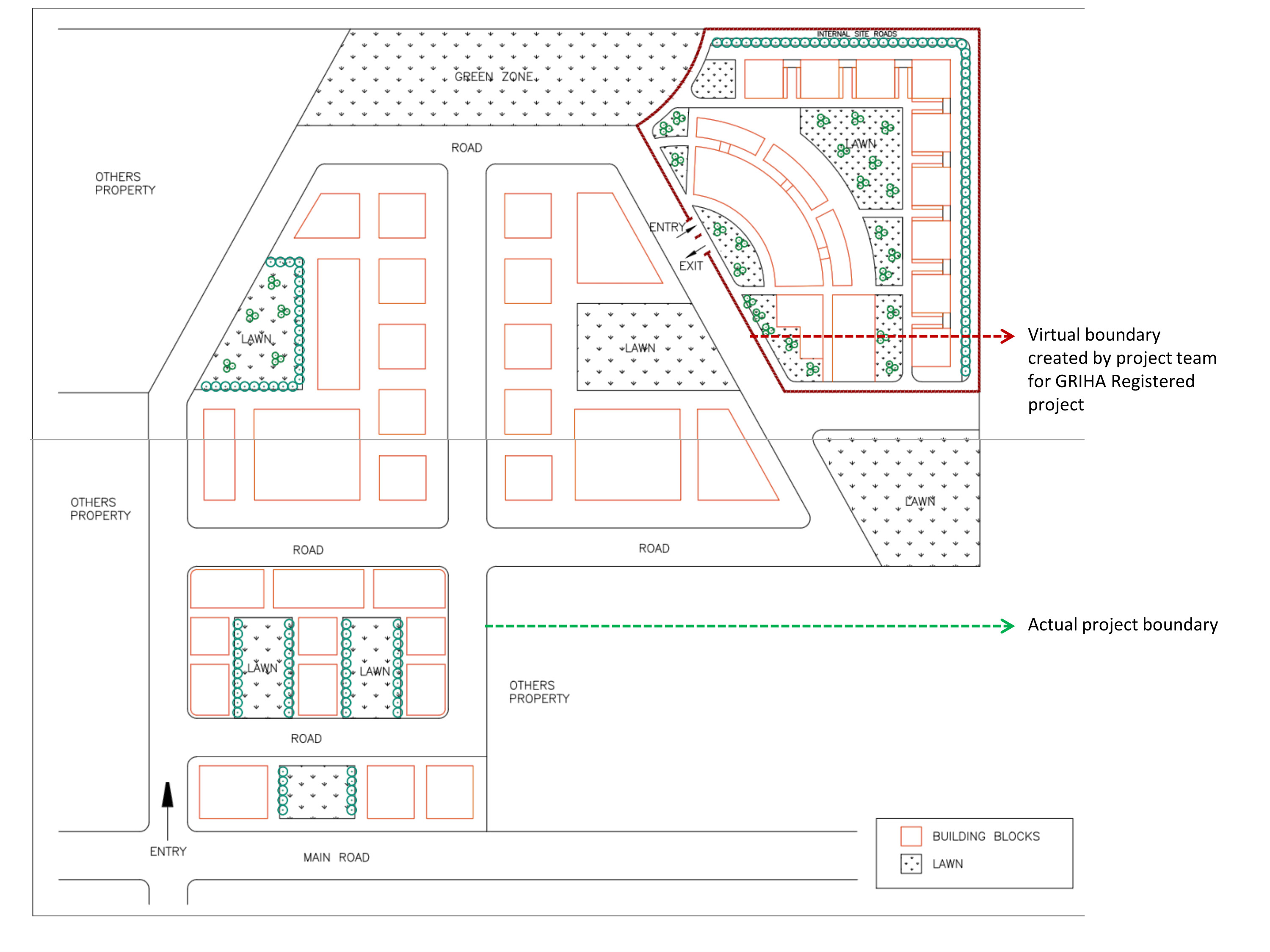
| 1 | Site Planning | 1 | Low Impact Design | Encourages site layout that minimizes disturbance to natural features and optimizes land use. | 6 | 16 |
| 2 | Design to Mitigate UHIE | Uses shading, vegetation, and reflective materials to reduce urban heat island effect. | 3 |
| 3 | Preservation and Protection of Landscape during Construction | Safeguards existing vegetation and soil quality through protective measures. | 3 |
| 4 | Storm Water Management | Implements systems to collect, filter, and recharge storm water to reduce runoff. | 2 |
| 5 | Reduction in Air and Soil Pollution during Construction | Applies dust suppression, waste control, and erosion prevention techniques. | 2 |
| 2 | Energy & Occupant Comfort | 6 | Envelope Thermal Performance | Optimizes building insulation and materials to reduce heat gain/loss. | 8 | 25 |
| 7 | Occupant Visual Comfort (Daylight) | Maximizes daylight penetration while controlling glare. | 5 |
| 8 | Efficient lighting | Promotes the use of energy-efficient lighting fixtures. | 2 |
| 9 | Energy Efficient Equipment | Encourages high-efficiency appliances and systems to reduce energy use. | 2 |
| 10 | Renewable Energy | Integrates on-site renewable energy systems such as solar PV. | 6 |
| 11 | Energy Metering | Provides separate metering for energy monitoring and optimization. | 2 |
| 3 | Water Savings | 12 | Efficient use of Water during Construction | Adopts practices to minimize water consumption at construction sites. | 2 | 19 |
| 13 | Optimization of Building and Landscape Water Demand | Reduces water use through low-flow fixtures and native landscaping. | 9 |
| 14 | Water Reuse | Encourages recycling and reuse of wastewater for landscaping or flushing. | 7 |
| 15 | Water Metering | Installs meters to track water consumption for efficient management. | 1 |
| 4 | Waste Management | 16 | Construction Waste Management | Ensures segregation, reuse, and safe disposal of construction debris. | 1 | 7 |
| 17 | Post Construction Waste Management | Provides systems for segregation and recycling of household waste. | 6 |
| 5 | Sustainable Building Material | 18 | Reduction in Environmental Impact of Construction | Uses locally available, resource-efficient, and low-impact materials. | 6 | 17 |
| 19 | Use of Low-Environmental Impact Materials in Building Interiors | Encourages non-toxic, sustainable materials for finishes and interiors. | 5 |
| 20 | Use of Recycled Content in Roads and Pavement | Utilizes recycled materials such as fly ash or reclaimed aggregates. | 4 |
| 21 | Low VOC paints, Adhesives, Sealants and Composite Wood Products | Minimizes indoor air pollutants by using low-VOC and non-toxic materials. | 2 |
| 22 | Zero ODP Materials | Prohibits materials with ozone-depleting substances in construction. | Mandatory |
| 6 | Social Aspects | 23 | Facilities for Construction Workers | Provides safe housing, sanitation, and welfare amenities for workers. | 1 | 16 |
| 24 | Universal Accessibility | Designs for barrier-free access for differently-abled and elderly persons. | 2 |
| 25 | Proximity to Transport and Basic Services | Ensures housing is within easy reach of public transport, schools, and healthcare. | 10 |
| 26 | Environmental Awareness | Conducts awareness programs for residents on sustainable living. | 2 |
| 27 | Tobacco Smoke Control | Restricts indoor smoking to maintain healthy indoor air quality. | Mandatory |
| 28 | Water Quality | Ensures potable water meets prescribed quality standards. | Mandatory |
| 29 | Provision of Access to Clean Sources of Cooking Fuel | Promotes use of LPG, PNG, or other clean cooking fuels. | 1 |
| 11 | Bonus Points | 30 | Bonus Points | Awards extra points for exemplary or innovative sustainability measures. | 4 | 4 |